Questions and answers
How do I choose a water damage restoration provider?
Use a short checklist. First, ask if the provider holds any license or insurance your state requires. Next, ask what equipment they use for water extraction and structural drying. Then ask for a written estimate that lists the work. Compare two if you can. Discussionseasy Restoration is a referral service, so a provider in our network follows up with you, and you decide whether to hire them.
What happens after I send an estimate request?
First, you fill out a short form about the damage. Next, Discussionseasy Restoration passes your details to an independent provider in our network. Then that provider may follow up to ask questions and plan a visit. Availability varies by provider. You can also Request a callback to check provider availability. Nothing is required of you after you send the request.
How much does water damage restoration cost?
Costs vary by job. In the U.S., a small spill might run a few hundred dollars. A flooded basement with extraction and drying often runs several thousand. Size, water type, materials and drying time all change the price. Ask each provider for a written quote that lists the work, so you can compare the numbers side by side before deciding.
Does homeowners insurance pay for water damage?
It depends on your policy and the cause. Some policies may cover sudden damage, such as a burst pipe. Slow leaks and outside flooding are often treated differently, and may need separate coverage. Check your policy or ask your insurer. Providers can often help document damage for a claim, so keep photos, notes and receipts together from the start.
What should I do before the provider arrives?
Follow these steps. First, stop the source if it is safe, such as closing a shutoff valve. Next, switch off power to wet areas only if you can do so without standing in water. Then take photos before cleanup. Write down what got wet. Move small items to dry ground. Skip anything that feels unsafe.
How long does structural drying take?
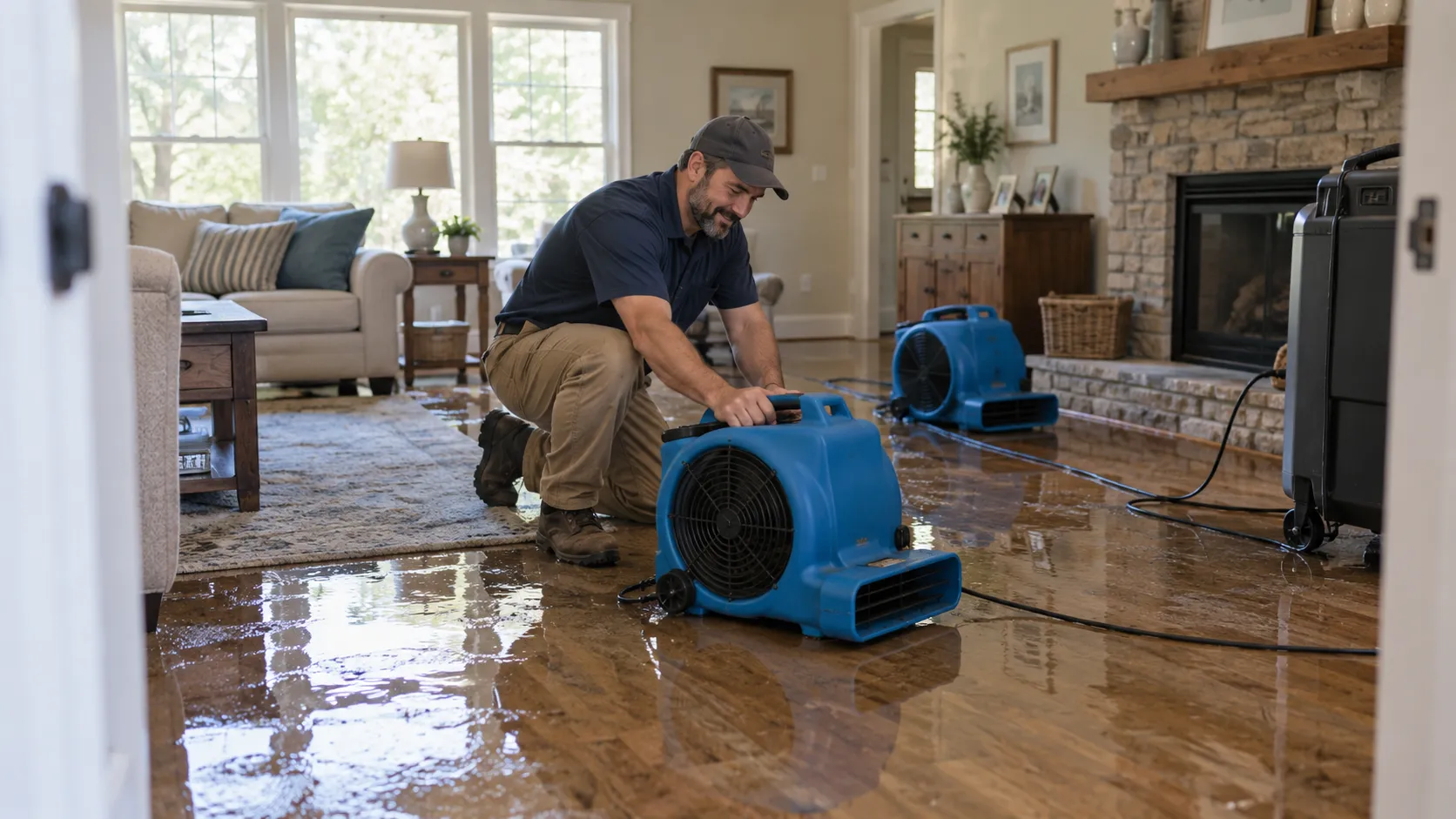
It varies. Many jobs take several days, though small ones can be shorter and large floods longer. Providers often place drying equipment and check moisture readings on each visit. Wet framing, insulation and subfloors take longer than carpet. Ask the provider for a rough timeline in writing, and ask what readings tell them the job is done.
Is Discussionseasy Restoration the company that does the repairs?
No. Discussionseasy Restoration is a referral service. We connect homeowners with independent local providers in our network. The provider does the work, sets the price and writes the estimate. Any agreement is between you and that provider. Ask them about their process, their timeline and what is included before you say yes. There is no obligation when you request an estimate.
Can mold grow after a flooded basement?
Yes, it can. In humid weather, mold may begin to grow within a day or two on damp materials. That is why extraction and drying matter. Watch for musty smells and dark spots on walls, boxes and carpet. If you see any, tell the provider early and ask whether they handle mold or can suggest next steps.