
Need flooded basement cleanup services in Des Moines?
Request an estimate and a local provider in our network can follow up. Prefer to talk? Request a callback to check provider availability.
No obligation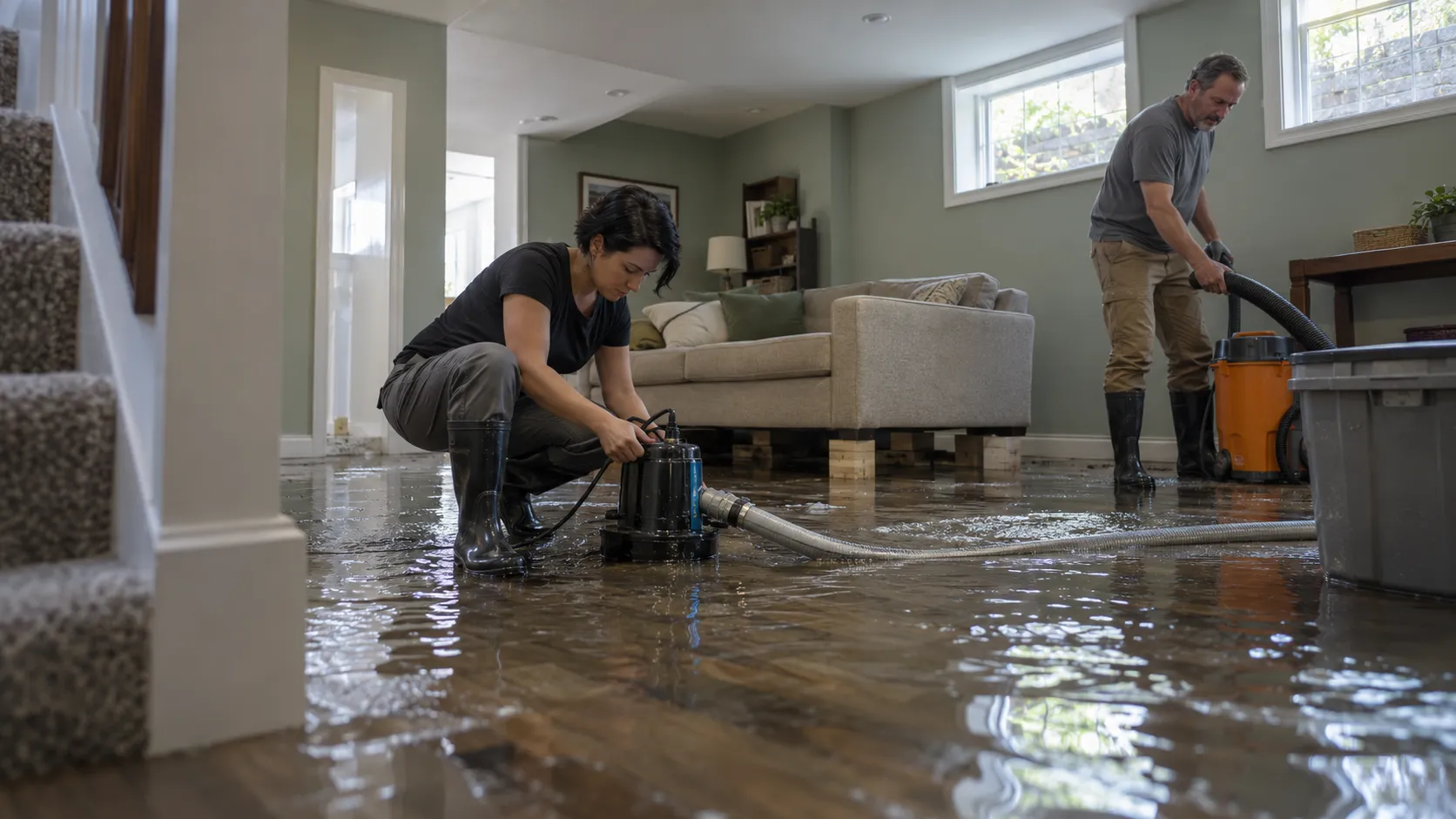
Request an estimate for your basement
A flooded basement in Des Moines can come from a burst pipe, a failed sump pump, a backed-up drain or heavy rain. The first job is staying safe. The next job is getting a local provider to look at it while the problem is still small.
Discussionseasy Restoration is a referral service. We do not do the cleanup. You send a request, and an independent provider in our network can follow up with you about the work. This page lists the steps in order, what to photograph, what cleanup usually includes, and what to ask before you agree to anything.
First, protect yourself. Basement water can reach outlets, cords, the furnace and the electrical panel. Do not walk into standing water if the power might be on. Stay upstairs until the electricity is off or a licensed electrician says it is safe.
Next, find out if water is still coming in. A broken supply line can be stopped at the main shutoff valve. A failed sump pump or a heavy storm may be harder to stop. If the water looks dirty or smells like sewage, do not touch it. Tell the provider right away.
Then, ask for help while the job is still small. Send a request and a local provider in our network can follow up about your basement. Availability differs from one provider to the next. Request a callback to check provider availability, or use the form.
Before anything is moved, take pictures. This takes five minutes and helps with estimates later.
1. Shoot wide views of each room. 2. Shoot close-ups of the waterline on walls. 3. Photograph damaged items, with the floor around them. 4. Note the date, time and what you think caused it.
The source changes the plan. Clean water from a pipe is handled differently than storm runoff or a sewer backup. Look for a wet spot near a pipe, a flooded sump pit, water at the floor drain, or seepage along the wall. Write down what you see. The provider will want those notes.
Water does not stay on the floor. It soaks into drywall, wood trim, carpet pad and boxes. In a humid summer, mold can start to grow within a few days. In cold weather, damp framing and frozen ground can slow drying. Emergency water damage repair starts with getting the water out and the air moving.
Exact steps depend on the provider and the job. Many include:
Structural drying has its own page, so use it if you want more detail.
Finished rooms have more to check. Carpet, baseboards, insulation and drywall can hold water behind the surface. Providers may cut small openings to test the walls. Some materials can be dried. Others have to be removed.
Bare concrete and block walls dry more easily. The cleanup often centers on the floor, stored items, wood framing, the water heater area and the sump pit. Even so, damp boxes and wood can grow mold, so they need attention.
Many homes here have a sump pump. If yours quit, ask the provider to note it in the estimate. Look at the power cord, the float and the discharge line. Also look at floor drains and window wells. A cleaned basement can flood again if the cause stays.
Sort things in this order.
Photograph each pile before you move it. Ask the provider about items you are unsure of.
When the work is done, walk the space with the provider. Check that surfaces are dry and that odors are gone. Ask when to expect a final moisture check. Watch for musty smells, new stains or peeling paint over the next few weeks.
Keep a folder, paper or digital. Put in your photos, notes, written quotes, receipts and the provider's work summary. Some policies may cover sudden damage, so check your policy. Providers can often help document damage for a claim. Ask, then decide.
1. Do you handle clean water, storm water and sewage? 2. What does the written estimate include? 3. How will you dry the walls and floor? 4. How will you check for moisture and mold? 5. What paperwork will I get when the job ends? 6. What can change the price?
On Discussionseasy Restoration, you send a request. A local provider in our network can follow up. The provider is independent. You decide whether to go ahead, and there is no obligation to book.
Pumps and vacuums pull standing water out so the floor and lower walls can start drying.
Soaked carpet, pad and drywall that cannot dry are often cut out and hauled away.
Hard surfaces get cleaned, and floodwater areas are treated to cut down on germs and odor.
Fans and dehumidifiers run until moisture readings in the walls and floor look normal.
Prices vary by job size, water type and how long the water sat. These are typical U.S. ranges only. Ask each provider for a written quote before work starts.
| Item | Typical range | Notes |
|---|---|---|
| Water removal (small) | $300 – $1,000 | Shallow water, one room |
| Water removal (large) | $1,000 – $4,000 | Deep water or a whole basement |
| Drying equipment | $400 – $1,500 | Depends on the days it runs |
| Carpet and pad removal | $300 – $1,200 | Priced by square footage |
| Drywall cut-out and disposal | $500 – $2,500 | Varies with height and area |
| Sewage cleanup add-on | $1,000 – $5,000 | Extra safety and sanitizing steps |
Turn off power if you can do so safely, shut off the water source and stay out of deep water.
Take photos before cleanup, then note the date, source and what was damaged.
Use the estimate form, or request a callback to check provider availability.
Review the written estimate, ask your questions, then choose whether to hire the provider.
Send one request instead of searching and comparing dozens of listings while water spreads.
Providers in our network serve homes like yours, from older frame houses to ranch homes.
Request an estimate, read it in writing, and decide with no obligation.
Providers do all the cleanup. We only connect you and explain how the process works.
Request an estimate and a local provider in our network can follow up. Prefer to talk? Request a callback to check provider availability.
No obligationFirst, stay safe. Keep out of standing water if the power may be on, and shut off the water source if you can reach it. Then take photos, write notes, and send a request so a local provider can follow up.
Small, clean-water spills can sometimes be handled by a homeowner. Deep water, sewage, wet drywall or lingering damp smells are different. Ask a provider for an estimate so you know what the job needs.
It depends on your policy and the cause. Some policies may cover sudden damage, but flood and sewer backup often need separate coverage. Check your policy, and ask the provider about documenting the damage.
Request an estimate and a local provider in our network can follow up. Prefer to talk? Request a callback to check provider availability.
No obligation