Need water extraction & structural drying services in Des Moines?
Request an estimate and a local provider in our network can follow up. Prefer to talk? Request a callback to check provider availability.
No obligation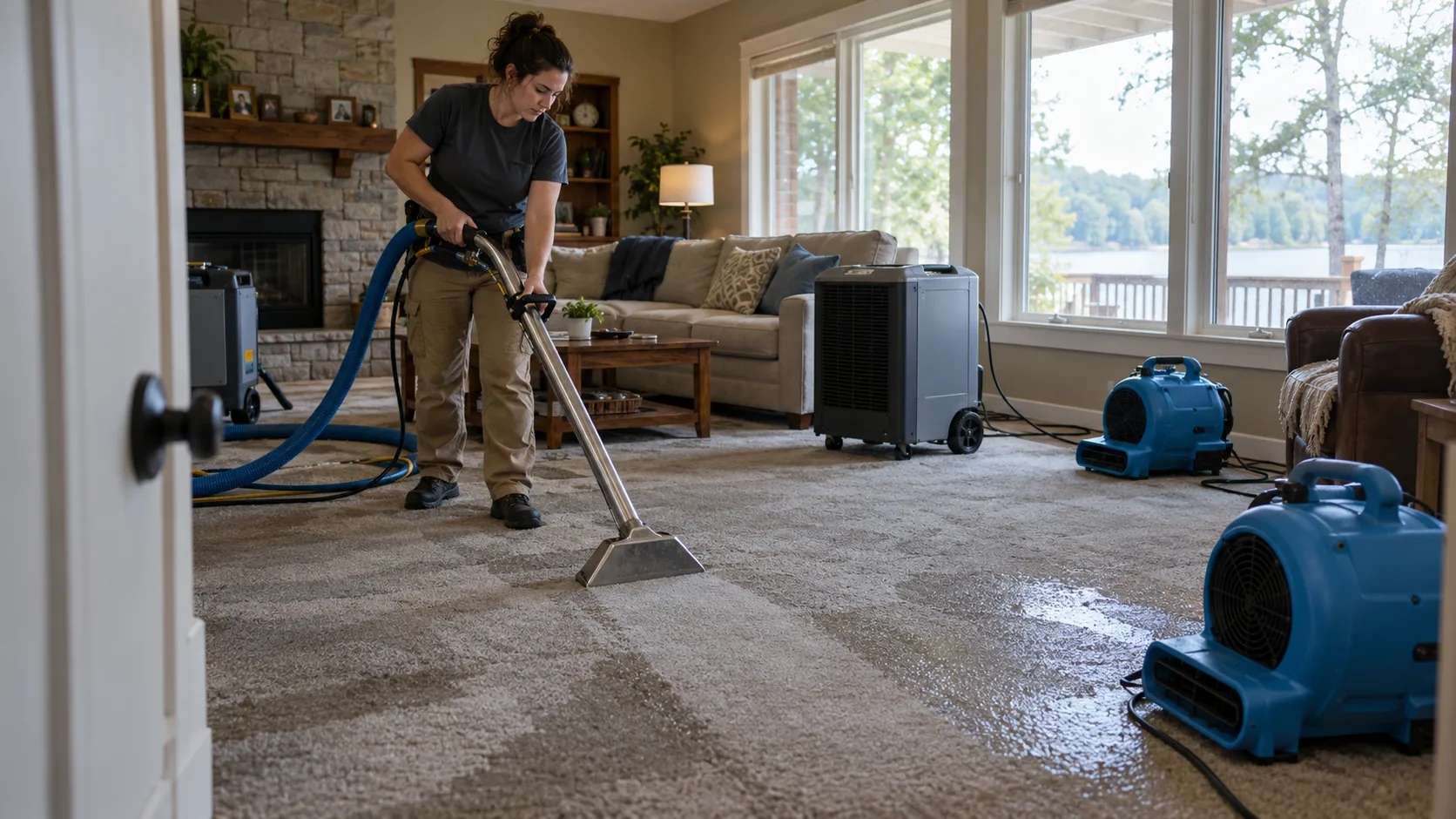
Request an estimate today
Water extraction pulls standing water out of your home. Structural drying then removes the moisture left in floors, walls, framing and subfloors. Both steps matter. If water is pumped out but the wood stays wet, mold and warping can follow.
Discussionseasy Restoration is a referral service. We do not do the work. You send a request, and an independent provider in our network can follow up about your Des Moines home. The provider checks the damage, explains the plan and gives a written estimate. This page lists what to do first, what to gather and what to ask, so you stay organized from the first photo to the last moisture reading.
If water is on your floor right now, work through the list below in order. It takes a few minutes. It also keeps a small problem from growing.
Shut off the main water valve if a pipe or appliance is leaking. If the water came from a storm, a failed sump pump or rising groundwater, you cannot stop it at a valve. Move on to the next item.
Water and electricity do not mix. If water is near outlets, cords or the panel, stay out and leave the power alone until a licensed electrician says it is safe. Do not walk through deep water in a basement.
Photograph the water line, the damaged items and the room from each corner. Add a short video. Write down the time you found the water. Photos before cleanup make estimates and any insurance talk much easier.
Drying equipment works on moisture in the air and in materials. It is not built to handle a puddle. Standing water has to leave first. Then the drying can start. Skipping this order wastes time and can leave hidden dampness behind.
Many providers can respond quickly, but availability changes with the weather and the day. Request a callback to check provider availability, or send a request and let a provider reach out.
A provider usually follows a simple pattern:
This is the core of emergency water damage repair. It is also the first stage of flooded basement cleanup when water has gathered below grade.
After the standing water is gone, the building still holds moisture. Wood, drywall, concrete and insulation all absorb it. Structural drying moves that moisture out on purpose, rather than waiting and hoping.
A provider may also open a small section of wall or lift a few floorboards to reach trapped dampness. This is normal when water has soaked behind a surface.
There is no single answer. Many jobs take a few days. Larger losses, thick materials and humid weather can stretch that out. Hot, humid summers slow drying because the air is already full of moisture. Cold winters can slow it as well, since cold air holds little moisture and the home may be closed up.
A good provider takes moisture readings on the first visit and again during the job. The job is done when the readings match dry reference levels, not when the surface feels dry. Ask to see the numbers.
You do not have to sit still. These steps help and do not get in the provider's way:
Put everything in one folder on your phone or in a notebook. Include photos, video, the time you noticed the water, a list of damaged items and every estimate you receive. Some policies may cover sudden damage, so check your policy. Providers can often help document damage for a claim, and tidy records speed that up.
Ask, then decide. Bring this list:
Spring flooding, hard thunderstorms and hail can push water into a home from several sides. Full basements with sump pumps are common in older frame houses, bungalows and ranch homes. When a pump fails or a gutter overflows, water collects low and soaks the foundation walls. Deep frost can also keep melting snow from draining away from the house.
First, you send a request with a few details. Next, a local provider in our network can follow up. Then you compare the plan and the written estimate. Discussionseasy Restoration does not do the work and does not set prices. The provider is independent and handles the job.
Pumps and wet vacuums clear water from floors and low areas so drying can begin properly.
Meters check walls, floors and framing to find dampness you cannot see.
Equipment moves damp air out and lowers humidity until materials reach dry levels.
Soaked padding, insulation or drywall may be taken out when it cannot dry safely.
Prices depend on how much water there is, how long it sat and what it soaked. These are typical U.S. ranges only. Always ask for a written quote before work starts.
| Item | Typical range | Notes |
|---|---|---|
| Water extraction, small area | $300 – $1,000 | Shallow water, one or two rooms |
| Water extraction, basement | $800 – $3,500 | Depends on depth and pump time |
| Structural drying equipment | $1,000 – $4,000 | Usually priced per day or per job |
| Moisture inspection | $150 – $500 | May be included in the job estimate |
| Wet drywall or insulation removal | $500 – $2,500 | Based on square footage removed |
| Carpet pad and flooring removal | $400 – $2,000 | Varies by material and room size |
Share your address, what happened and a few details about the water.
A local provider in our network can contact you about the job.
Compare the written estimate, equipment plan and drying steps.
The independent provider extracts the water, dries the structure and records readings.
Send one request instead of phoning many companies yourself.
Independent providers in our network serve homes in your area.
Review a written estimate and ask your questions before you decide anything.
Our checklists help you keep photos and notes organized for estimates.
Request an estimate and a local provider in our network can follow up. Prefer to talk? Request a callback to check provider availability.
No obligationMany jobs take a few days, but it depends on the materials, the amount of water and the humidity. The provider's moisture readings show when the structure is actually dry.
For a small, clean spill, maybe. For deeper water or wet walls, moisture can stay hidden and lead to mold. A provider has meters and stronger equipment to check.
Some policies may cover sudden damage, but not all do. Check your policy and ask your insurer. Providers can often help document damage, so keep photos and notes.
Request an estimate and a local provider in our network can follow up. Prefer to talk? Request a callback to check provider availability.
No obligation