Need water damage restoration services in Des Moines?
Request an estimate and a local provider in our network can follow up. Prefer to talk? Request a callback to check provider availability.
No obligation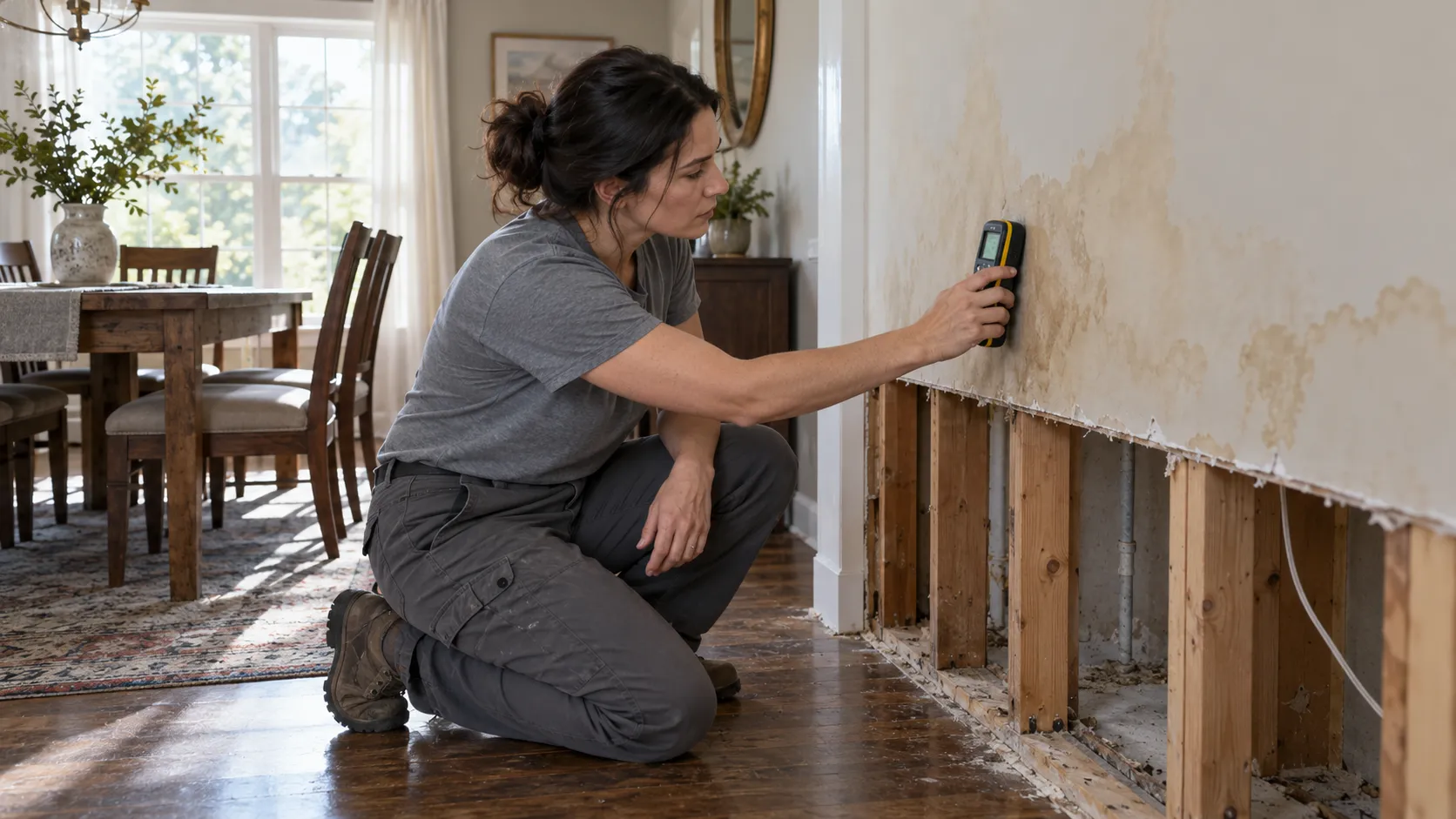
Request an estimate
Water in the wrong place can spread fast. A burst pipe, a failed sump pump or a storm leak can soak floors, walls and belongings. Discussionseasy Restoration is a referral service. We connect homeowners in the Greater Des Moines area with independent local water damage restoration providers. We do not do the work ourselves.
This page works like a checklist. It shows what to do first, what to photograph, what the work usually includes and what to ask before you agree to anything. You send one request. A provider in our network can follow up about your job. Availability and call hours vary by provider, so ask when you connect. Every estimate, schedule and repair plan is set between you and the provider.
Water in your home is stressful. A clear order of steps helps. Work through the list below, then ask a local provider to follow up.
Find where the water is coming from. Shut off the main water valve if a pipe has burst or a supply line has failed. If the water came from outside, such as a storm or rising ground water, you may not be able to stop it. In that case, move on to safety.
If water is near outlets, appliances or a breaker panel, stay away. Turn off power only if you can reach the panel without stepping in water. If you cannot, leave it alone and ask a licensed electrician for help.
Keep children and pets out of wet rooms. Wet floors are slippery. Soaked ceilings can sag and fall. Do not walk under a ceiling that is bulging or dripping.
Lift small items off wet floors. Move rugs, books, shoes and electronics to a dry spot. Leave heavy furniture where it is unless it is safe to move.
Do this before you mop or toss anything. Records help with estimates and with any insurance conversation.
Water soaks into drywall, wood and insulation. The longer materials stay wet, the more they swell and warp. Mold can start to grow within a couple of days in warm, damp air. Hot, humid summers make this more likely.
Starting early often keeps the job smaller. Many providers can respond quickly, but availability varies. Request a callback to check provider availability in your area.
The exact scope depends on the home and the water. Most jobs follow the same general order.
The provider looks at the damage and checks how far the moisture has spread. Meters can find wetness behind walls and under floors that you cannot see.
Pumps and vacuums remove standing water. Fans and dehumidifiers then pull moisture from the structure. This drying stage can take several days.
Affected surfaces are cleaned. Items that can be saved are treated. Items that cannot be saved are set aside for you to review.
Wet drywall, insulation or flooring may need to be cut out and replaced. Some providers handle repairs. Others focus on cleanup and drying and leave rebuilding to a contractor.
Providers sort water into three groups. The group affects the safety steps and the price.
If you are unsure, treat the water as unsafe until a provider says otherwise.
Homes in the Greater Des Moines area face a mix of risks. Cold winters with deep frost can split pipes. Spring thaws and heavy rain can push water into full basements. Severe thunderstorms and hail can damage roofs and let rain in. A sump pump can fail right when it is needed most.
Older frame houses, bungalows and ranch homes can also have aging plumbing and old roofing. Mention the age of your home when you talk with a provider.
Keep everything in one folder, on paper or on your phone. Include photos, notes, receipts and any written estimates.
Some policies may cover sudden damage, such as a burst pipe. Slow leaks and flood events are often treated differently. Check your policy or ask your insurer. Providers can often help document damage for a claim, but your insurer makes the coverage decision.
Discussionseasy Restoration is a referral service. You send a request. A local provider in our network can follow up about the job. The provider is independent and does the work. Any price, schedule or agreement is between you and the provider.
Before you agree to anything, ask these questions.
Compare answers. A clear, written plan is a good sign.
After drying, the provider should check moisture levels again. Ask to see the final readings. Then decide what repairs are needed, such as new drywall, paint or flooring. Watch for musty smells or new stains over the next few weeks. If you see them, tell the provider.
A provider checks walls, floors and ceilings with meters to find hidden wetness before work begins.
Pumps and vacuums clear standing water so drying can start.
Fans and dehumidifiers pull moisture from wood, drywall and flooring until readings look normal.
Surfaces are cleaned and damaged materials are removed. Some providers also rebuild what was taken out.
Prices vary by job size, water type and home layout. These are typical U.S. ranges, not quotes. Get a written estimate from a provider before work starts, and ask what could change it.
| Item | Typical range | Notes |
|---|---|---|
| Small leak cleanup | $400 – $1,500 | One room, clean water, quick start |
| Water extraction | $800 – $3,000 | Depends on depth and area |
| Structural drying equipment | $1,000 – $5,000 | Several days of fans and dehumidifiers |
| Drywall and insulation removal | $1,000 – $4,000 | Varies by wall area affected |
| Sanitizing gray or black water | $1,500 – $6,000 | Added safety steps raise the price |
| Rebuild and repairs | $2,000 – $15,000+ | Flooring, drywall and paint add up |
Shut off the main water valve if a pipe or supply line is leaking.
Record each room and damaged item before any cleanup begins.
Send the form and a local provider can follow up about the job.
Review written estimates and ask questions before you approve any work.
Send one request instead of sorting through many listings while water is still spreading in your home.
Providers in our network serve your area and know local homes.
A clear checklist shows what to do, what to photograph and what to ask.
Requesting an estimate does not commit you to hiring anyone.
Request an estimate and a local provider in our network can follow up. Prefer to talk? Request a callback to check provider availability.
No obligationFirst, stop the source if you can, such as shutting off the main water valve. Then stay clear of electrical hazards, take photos, and request an estimate from a local provider.
Small jobs can take a few days, mostly for drying. Larger jobs with repairs can take weeks. The provider can give a more specific timeline after checking the damage and moisture levels.
Some policies may cover sudden damage like a burst pipe, but flooding and slow leaks are often treated differently. Check your policy and ask your insurer before you decide.
Request an estimate and a local provider in our network can follow up. Prefer to talk? Request a callback to check provider availability.
No obligation